Europe is brilliant at discovery. But can it turn breakthroughs into real-world impact?

From billion-dollar AI funding to advances in quantum computing and fusion energy, Europe’s tech ambition is growing. But scientific brilliance is only half the battle. What happens after the breakthrough may matter most of all. Europe has never been short of scientific talent. Now, there are signs that the continent is finding its footing. From Parisian AI laboratories to German fusion startups, a new generation of researchers and entrepreneurs is attracting serious capital, pursuing ambitious ideas and challenging assumptions about Europe’s place in the global technology landscape. The numbers are promising. But beneath the expectations lies a familiar question: can Europe turn promising discoveries into technologies that reach the market, scale internationally and make a lasting impact? In a recent Financial Times column, “Europe is finally flexing its innovation muscles”,” John Thornhill describes a shift towards what he calls “creative innovation.” The argument is compelling. Europe is beginning to invest more confidently in its technological future. Yet investment is ignition. What matters is whether that momentum can translate into products, businesses and industries that endure Big ambitions, bigger challenges The signs of progress are visible across multiple fields. In artificial intelligence, three European startups (AMI Labs in Paris, Ineffable Intelligence and Recursive Superintelligence in London) have collectively raised $2.8 billion in seed funding, according to Thornhill. The scale of these early-stage investments illustrates the growing ambition surrounding advanced AI, although funding alone does not guarantee that new technologies will succeed commercially. Quantum computing offers another indication of Europe’s strengths. According to PitchBook data cited by the Financial Times, Europe accounts for 43% of global venture capital funding in the sector, ahead of the United States. This is a significant indicator of investment activity in a field where scientific advances could eventually transform computing, simulation and complex problem-solving, even as many applications remain under development. Energy is another area in which research is beginning to attract substantial private capital. Thornhill reports that three German nuclear fusion startups — Focused Energy, Marvel Fusion and Proxima Fusion — had raised more than $500 million combined since the beginning of 2025. These investments reflect growing interest in alternative approaches to fusion energy, a technology that still faces major scientific and engineering challenges before commercial deployment becomes possible. Beyond these sectors, Europe’s strengths in biotechnology, pharmaceuticals, advanced materials and robotics provide further opportunities to translate scientific knowledge into practical applications. Artificial intelligence could accelerate progress in drug discovery and industrial processes, while advances in materials science and robotics could support new manufacturing capabilities and more efficient infrastructure. These developments suggest that Europe’s innovation story cannot be reduced to a question of whether the continent produces enough promising ideas. The more consequential question is what happens to those ideas next. The difficult journey from lab to market Scientific excellence is an essential starting point, but it does not automatically translate into commercial success. Moving from a promising discovery to a technology deployed at scale requires sustained investment, specialised talent, industrial partnerships, access to customers and the ability to navigate complex markets. For many European startups, securing early-stage funding is only the beginning. As companies mature, they need larger rounds of capital to build infrastructure, expand production, recruit specialised teams, and enter international markets. This is particularly important in deep tech, where development cycles can be long, technical risks substantial, and the distance between a laboratory result and a commercially viable product is considerable. Europe also faces the challenge of fragmentation. Different national markets, investment networks and procurement practices can make it harder for innovative companies to expand across borders. At the same time, the transfer of technology from universities and research centres to industry remains uneven, despite the strength of Europe’s research institutions. These are not problems that can be solved by writing larger cheques. They require something more difficult to build: an innovation ecosystem in which research institutions, entrepreneurs, investors and established companies work together effectively, from the earliest experiments to large-scale deployment. The goal should not be to produce more startups for their own sake. It should be to help more promising technologies survive the journey from scientific possibility to meaningful real-world impact. Making talent visible There is another ingredient in that journey that receives less attention than funding rounds or scientific milestones: visibility. Technological breakthroughs do not emerge from institutions alone. Behind them are people who spot an overlooked problem, pursue an unconventional idea or spend years working on something others consider unlikely to succeed. Some of them have the networks, resources and institutional backing to advance their work. Others remain largely unknown beyond their laboratories, universities or immediate professional circles. That lack of visibility can have consequences. A researcher struggling to find an industrial partner may be working on precisely the technology a company needs. A young founder may have a compelling solution but limited access to investors. An engineer developing an unconventional approach may benefit from collaboration with experts in another discipline or country. In each case, the problem is not necessarily the quality of the innovation. It is the distance between the people developing it and those who could help it advance. Recognition and visibility cannot replace funding, commercial expertise or technical validation. But they can help close that distance. Initiatives that recognise emerging talent therefore have a role to play in Europe’s innovation ecosystem. Their value extends beyond celebrating individual accomplishments: they can help make important work visible, bring different communities together and strengthen the links between scientific discovery and practical application. An ecosystem built around possibility Europe does not need to start from scratch. It has world-class researchers, established industrial capabilities, entrepreneurial talent and a growing range of technologies with the potential to create new markets and address pressing challenges. It also has genuine weaknesses that cannot be wished away by a handful of spectacular funding announcements. The question is no longer simply whether Europe can produce groundbreaking science. It demonstrably can. The harder question is whether it can consistently create the conditions for that science to
Innovators Under 35: where the future announces itself first
The global IU35 award began in 1999, on the occasion of MIT Technology Review’s 100th anniversary. Because one way to understand where the world is going is to pay close attention to the people taking it there. Since then, Innovators Under 35 has grown from an annual list into a global search – and a community spanning countries, disciplines and generations of innovators. Innovators Under 35 looks beyond credentials, titles and polished campaigns. We seek researchers, founders, inventors and technologists whose work represents a genuine advance – whether they are rethinking how we produce energy, developing new ways to diagnose disease, building more capable machines or applying existing technologies in ways no one had considered before. Clear and compelling communication matters, of course. But we value even more the ambition behind the work, the focus required to pursue it, and the ability to make its significance understood. Because what matters to us is not innovation for innovation’s sake. It is work capable of reaching beyond the walls of a laboratory, the boundaries of an industry or the interests of a single market. The question we care about most is deceptively simple: “Could this improve something that matters to humanity?” Over the years, that question has led us to people at remarkably early stages of their careers, but impressively advanced level of their innovation projects. Our past honourees have made it possible to diagnose genetic conditions in hours rather than weeks, produce aviation fuel from carbon dioxide, reduce the carbon footprint of cement, cool buildings through advanced materials, and apply additive manufacturing to rocket propellants – among many other advances. Through IU35, they have found themselves on the same stage and inside the same network. Many would never otherwise have crossed paths. The award places a name on a list because exceptional work deserves recognition. But our community extends that recognition across years and continents, connecting people whose ideas, research and technologies are changing how the world works. Through its regional editions, MIT Technology Review has expanded that community around the world. European innovators, connected Europe has extraordinary scientific and technological depth, but also a great complexity in creating connections. It does not operate as a single innovation ecosystem: talent is distributed across countries, languages and institutions – from research universities and engineering schools to hospitals, startups, industrial companies and independent laboratories. A breakthrough in Copenhagen may have much in common with one taking shape in Milan, Paris, Lisbon or Warsaw, even if the people behind them have never crossed paths. Innovators Under 35 Europe exists to create those crossings. It is about making European talent more visible, to Europe itself and to the wider world, while creating contact between the people shaping the next generation of science and technology. Strong innovation ecosystems are built not only on brilliant individuals, but on the connections between them. That is why we search across the continent for exceptional people, give their work the recognition it deserves, and bring them into a community and create new synergies.
IU35 Voices: Naroa Coretti Sánchez, 2023 winner

What is the future of urban mobility? Naroa Coretti Sánchez, one of our 2023 Innovators Under 35, is working to make it smarter and more sustainable. Naroa Coretti Sánchez is a Research Scientist at the MIT Media Lab, where she explores new approaches to urban mobility, combining autonomous technologies, data-driven modeling and sustainable transportation systems. Her work has earned her recognition from MIT Technology Review’s Innovators Under 35 Europe and Forbes 30 Under 30. In 2023, Naroa Coretti Sánchez was selected as one of MIT Technology Review’s Innovators Under 35 Europe, joining a community of young researchers, entrepreneurs and technological pioneers recognized for their potential to shape the future through innovation. Originally from the Basque Country, Naroa has built her research career at the intersection of engineering, technology and urban sustainability. At the MIT Media Lab’s City Science group, her work focuses on rethinking how people move through cities and how emerging technologies can make transportation more efficient, accessible and environmentally sustainable. Her research explores lightweight autonomous mobility systems, including self-driving bicycles and shared mobility solutions that could offer cities an alternative to conventional transportation models. Rather than simply introducing new vehicles, her work investigates how these technologies could transform entire urban mobility systems. Since receiving the IU35 recognition, Naroa has continued her research at MIT, earned her PhD and been named to the Forbes 30 Under 30 list. Her work has also attracted international media attention and has been exhibited at institutions including the Museum of Science in Boston and the Guggenheim Museum Bilbao.
Innovators Under 35 Europe 2027 – Launch
The official launch of Innovators Under 35 Europe 2027, the European edition of MIT Technology Review’s global programme recognizing the most promising young innovators. Discover the initiative opening applications across Europe to outstanding talents in science, technology and engineering whose innovations have the potential to create meaningful impact on society and the world. EVENTS 23rd October 2026 3 p.m. CEST Rome Maker Faire, Gazometro Ostiense, Via del Commercio 9-11, 00154 Rome RM
IU35 Voices: Yannis Assael, 2023 winner

How can AI help us uncover the secrets of the past? One of the innovators recognized by MIT Technology Review is exploring the answer. Yannis Assael is an AI researcher at Google DeepMind whose work explores how artificial intelligence can solve problems once considered beyond the reach of technology, from understanding human speech to recovering lost knowledge from ancient texts. In 2023, Yannis Assael was recognized as one of MIT Technology Review’s Innovators Under 35 Europe, joining a community of young researchers, entrepreneurs and technological pioneers working to push the boundaries of innovation. Selected in the Artificial Intelligence & Robotics category, Assael was recognized for his contributions to machine learning and his work exploring new applications of artificial intelligence. His journey has taken him from the University of Macedonia to Oxford, Imperial College London and eventually Google DeepMind. His research has attracted international attention, including recognition in the scientific journal Nature. Among his contributions is the application of AI to damaged ancient texts, helping researchers recover information that might otherwise remain inaccessible. His work illustrates how advances in artificial intelligence can connect seemingly distant fields, from computer science to archaeology and cultural heritage. As part of our IU35 Voices series, we reconnect with Yannis Assael, one of the innovators recognized in 2023, to hear his perspective on the Innovators Under 35 experience and what it means to be part of this international community. Watch his story now.
IU35 Voices: Angelos Tsereklas Zafeirakis, 2023 winner
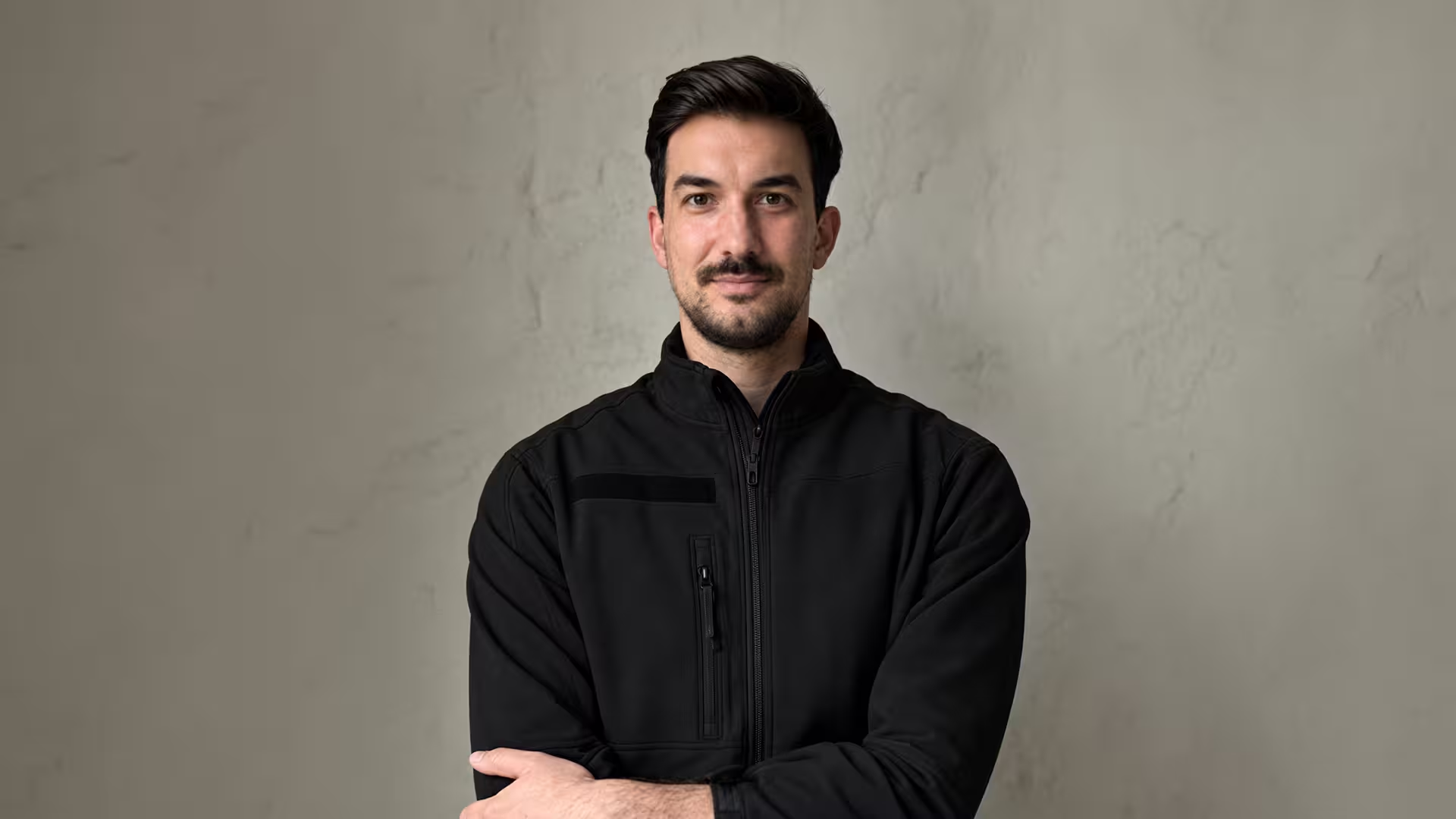
Can artificial intelligence make the world’s oceans safer? One of the Innovators Under 35 is working to make it possible. Angelos Tsereklas Zafeirakis is the Managing Director of SOTIRIA, a deep-tech startup developing AI-powered sensing technologies to improve underwater security and protect critical maritime infrastructure. In 2023, Angelos Tsereklas Zafeirakis was named one of MIT Technology Review’s Innovators Under 35 Europe, joining a community of young innovators recognized for developing technologies with the potential to address significant global challenges. Recognized in the Artificial Intelligence & Robotics category, Zafeirakis represents a generation of entrepreneurs turning advanced scientific research into practical solutions for complex real-world problems. As Managing Director of SOTIRIA, he has led the development of AI-powered underwater surveillance technologies designed to detect threats that conventional systems may struggle to identify. The company’s solution, Nereid, combines neural networks with advanced sensing equipment to help protect critical maritime infrastructure. His work has also reached the international defense ecosystem. Within its first 14 months, SOTIRIA participated in a NATO naval exercise in Portugal, engaged with five naval forces across Europe and North America, and established a partnership with the European Defence Agency in the field of AI. Through our IU35 Voices series, we revisit the people behind previous editions of Innovators Under 35. Angelos Tsereklas Zafeirakis shares his perspective as a 2023 winner and reflects on his experience with the initiative. Watch his story to find out.
Innovators Under 35 Europe 2027: the search for Europe’s most outstanding innovators begins

MIT Technology Review is opening a Europe-wide programme to find and recognize innovators whose work has the potential to create positive change for society and the world. The next important breakthroughs are already taking shape somewhere in Europe. Some may begin as experiments in a laboratory; others are becoming products, companies or entirely new ways of approaching problems that nobody has managed to solve yet. Innovators Under 35 has a history of spotting potential early, and now it’s Europe’s turn to take the spotlight. Innovators Under 35 Europe, the European edition of MIT Technology Review’s global Innovators Under 35 programme, officially launches on October 23, 2026, opening applications to innovators working across science, technology and engineering. We are looking for people developing breakthrough technologies, products, services and applications with the potential to create meaningful change – for society, the economy, the environment and the way people live and work. Who can apply? Innovators Under 35 Europe is open to individuals who are at least 18 and under 35 and hold a valid passport or residence permit in one of the countries covered by the European edition. Candidates may come from universities and research centres, startups, established companies or independent projects. They may be researchers, managers, founders, engineers, inventors or technologists. What matters is the work: what is new about it, what problem it addresses and how people, society or the world could benefit from it. Candidates can apply directly or be nominated by someone else: their friends, colleagues, peers, investors, universities. In either case, candidates complete their own application. The search extends across the whole continent of eligible countries and innovation ecosystems covered by the European edition. What are we looking for? The innovation should have moved far enough beyond the initial idea for its potential to be understood and assessed. It should be grounded in science, technology or both, address a clearly defined problem and show a credible route towards real-world use. The areas include Biotech & Medicine, Energy & Infrastructures, Nanotechnologies & Materials, AI & Advanced Computing, Robotics & Hardware, Smart Cities, Mobility & Urban Tech, Climate Tech & AgriFoodTech, Cybersecurity & Digital Trust, and Human Tech. We are interested in innovations that can create meaningful impact for people, organizations, industries, society or the environment. Where relevant, we will also consider the role that the work could play in Europe and its contribution to the continent’s technological, economic, and societal development. It does not, however, need to be exclusively European in its ambition or application. Applications open on October 23 Applications for Innovators Under 35 Europe 2027 open on October 23, 2026, and close in May 2027. Following the eligibility, evaluation and selection process, the new cohort will be announced in October 2027 and recognized at the Innovators Under 35 Europe Award Ceremony in Rome. Those selected will become MIT Innovators Under 35 Europe 2027, joining a global community of innovators whose work spans generations, disciplines and technologies. Their work will gain visibility through MIT Technology Review and the European edition’s wider media and innovation network, while creating opportunities to connect with companies, institutions and people across the ecosystem. Help us make sure the right people know about IU35 Great work does not always get noticed. Talented innovators need visibility, recognition, and the right connections to help their ideas travel further. You may be working on something yourself. You may know someone whose work deserves to be seen. Or you may be part of the research, technology, and innovation community that can help us find them. Apply with your work. Nominate an innovator. Or join the community as a partner, judge, or ambassador and help us widen the search. The next generation of Innovators Under 35 is already out there. Help us find them early – and give important ideas the recognition and connections they need to go further. Learn more IU35: the vision behind the European project and the community supporting it Explore eligibility, the application process and the official rules